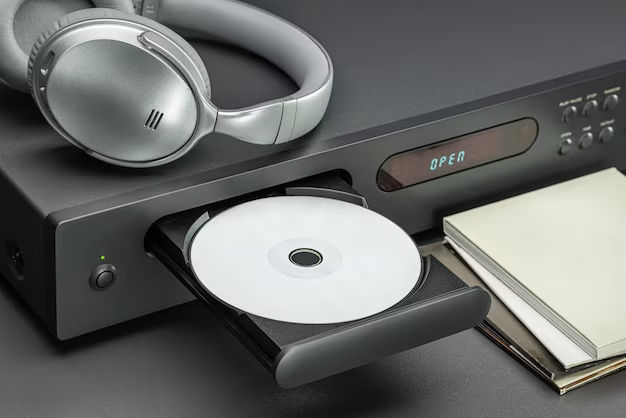
I still remember the exact moment this all started. I was on a long road trip, flipping through my car’s dusty CD wallet, trying to find that one album I loved in college. My iPhone was sitting right there on the dashboard, full of playlists, podcasts, and audiobooks. And yet… I couldn’t easily connect the two worlds. That frustration led me to discover cdiphone, and honestly, it changed how I think about mixing “old-school” media with modern tech.
If you’ve ever felt torn between physical CDs and digital convenience, you’re not alone. Let me walk you through what cdiphone is, how I use it, and why it might be the missing link in your setup.
What Is CDiPhone, Really?
In simple terms, cdiphone refers to solutions that help connect CD-based audio systems with iPhones. This can mean:
-
Hardware adapters for car stereos
-
Software tools to rip CDs to iPhone-friendly formats
-
Hybrid players that support both CDs and mobile devices
When I first heard the term, I thought it was just another cable. Turns out, it’s more of a concept and ecosystem built around audio compatibility, music transfer, and modern playback convenience.
And once you get it right, it’s surprisingly smooth.
Why I Started Using CDiPhone Solutions
My “Too Many CDs” Problem
I own over 200 CDs. Some are rare live recordings you can’t even find on streaming platforms. Others have sentimental value. But carrying them around? Not practical.
That’s where cdiphone setups became my best friend.
Here’s what pushed me to act:
-
My car stereo only supported CDs
-
My iPhone had all my daily playlists
-
Bluetooth wasn’t an option in my older car
-
AUX ports were unreliable
I wanted digital convenience without ditching physical media.
How CDiPhone Works in Real Life
Let’s break it down in a real-world way.
1. Hardware-Based CDiPhone Setup
This is the route I took for my car.
Common options include:
-
CD-to-AUX adapters
-
Bluetooth transmitters that plug into CD players
-
Dedicated iPhone car adapters
Once connected, your phone sends audio directly through the CD system. No disc swapping. No fumbling.
2. Software-Based CDiPhone Workflow
At home, I use CD ripping software to convert discs into:
-
MP3
-
AAC
-
FLAC (for high-quality backups)
Then I sync those files to my iPhone. This method works great if you want offline music access without relying on streaming apps.
My Personal CDiPhone Setup (What Actually Worked)
After testing a few setups, here’s what stuck.
Step-by-Step Setup I Use
-
Rip CDs to high-quality MP3 format
-
Organize files by artist and album
-
Sync to iPhone using wired transfer
-
Use car adapter for playback
It took me about one weekend to digitize my favorite albums. Totally worth it.
What Surprised Me Most
I didn’t expect the sound quality to be this good.
Honestly, some CDs sounded better than streaming versions. Less compression. More clarity.
Benefits of Using CDiPhone Systems
Here’s what I personally gained:
-
Easy access to rare music
-
Offline playback anywhere
-
Better audio control
-
No monthly subscription stress
-
One library across devices
And the biggest win?
I finally stopped juggling CDs during drives.
Common Mistakes I Made (So You Don’t Have To)
Yep, I messed up at first.
Mistake #1: Choosing Low-Bitrate Audio
Early on, I ripped tracks at low quality to save space.
Bad idea.
Now I always choose higher bitrates. Storage is cheap. Audio quality matters.
Mistake #2: Ignoring File Organization
Trust me, naming files properly saves hours later.
Use folders like:
-
Artist Name
-
Album Title
-
Year
It makes your cdiphone library feel professional.
CDiPhone vs Streaming Apps
People always ask me this.
“Why not just use Spotify or Apple Music?”
Good question.
Here’s my honest comparison:
CDiPhone Advantages
-
Own your music forever
-
No internet needed
-
No ads
-
Better control over audio files
Streaming Advantages
-
Discovery features
-
Automatic updates
-
Easy playlist sharing
For me, cdiphone complements streaming instead of replacing it.
I stream casually. I use cdiphone for personal favorites and rare tracks.
Related Keywords You’ll Hear Around CDiPhone
As I dug deeper into this space, I kept running into related terms:
-
iPhone audio adapter
-
CD ripping software
-
Digital music transfer
-
Car stereo integration
-
Offline music playback
If you see these, they’re usually connected to cdiphone-style setups.
Is CDiPhone Worth It in 2026?
Short answer: yes, if you value flexibility.
Here’s who I think benefits most:
-
Drivers with older car stereos
-
Music collectors
-
Audiophiles
-
Travelers with limited data access
-
Anyone tired of subscription fatigue
It’s not about being old-fashioned. It’s about owning your listening experience.
My Two Biggest Personal Tips
Let me save you some time.
Tip #1: Test With One Album First
Before converting your whole collection, try one CD.
Check:
-
Sound quality
-
Transfer speed
-
Playback compatibility
This avoids frustration.
Tip #2: Keep a Backup Folder
Always store a backup copy on your laptop or external drive.
I learned this the hard way after accidentally deleting files.
Backup = peace of mind.
Troubleshooting Common CDiPhone Problems
Things don’t always go smoothly.
Here are quick fixes I use:
-
No sound in car? Check AUX input selection
-
Files not showing on iPhone? Refresh library sync
-
Audio skipping? Use higher quality cables
-
Connection drops? Avoid cheap adapters
Most issues are small and easy to solve.
Where I See CDiPhone Going Next
Technology keeps evolving.
I expect future cdiphone tools to include:
-
Wireless lossless audio
-
Faster syncing
-
Smart car integration
-
Voice control compatibility
The idea of merging physical and digital media isn’t going anywhere.
Final Thoughts: Why CDiPhone Earned a Permanent Spot in My Setup
If you told me a year ago that I’d be excited about mixing CDs with my iPhone, I would’ve laughed.
But here I am.
CDiPhone gave me the best of both worlds — physical music ownership and digital convenience. It simplified my drives, preserved my music collection, and made listening fun again.